
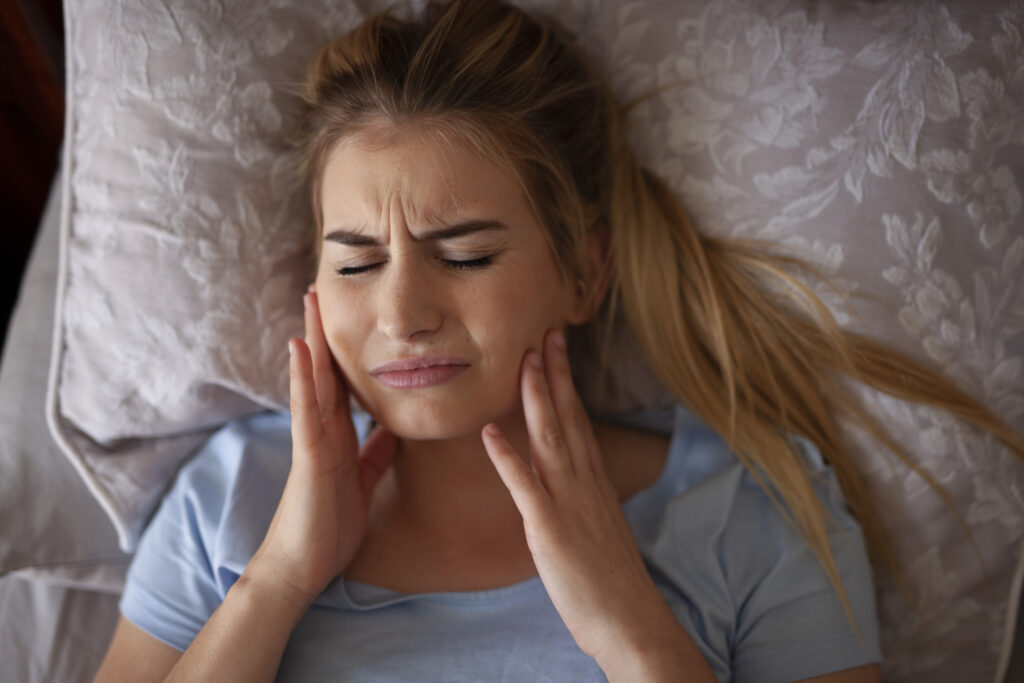
Your teeth work together every day, and how they meet can affect chewing. When your upper and lower teeth don’t come together properly, the imbalance can add stress to your jaw joints and surrounding muscles. Over time, a misaligned bite may contribute to TMJ/TMD and make everyday jaw movement uncomfortable.
At McDowell Dental & Aesthetics in Abington, PA, Dr. Ashley has advanced LVI training in neuromuscular dentistry and TMJ/TMD. She combines this education with modern dental technology to evaluate how your teeth, jaw joints, and muscles work together.
What Does Your Bite Have to Do With TMJ/TMD?
Your bite refers to how your upper and lower teeth fit together when you close your mouth. Ideally, your teeth, jaw joints, and muscles work together comfortably.
With malocclusion, or a “bad bite,” that relationship can become uneven. Certain teeth may make contact sooner or carry greater pressure than others. Your jaw muscles may then work harder to bring your teeth together, which can contribute to strain around the temporomandibular joints.
What Signs Can a Misaligned Bite Cause?
Bite-related TMJ/TMD can show up in ways that are easy to connect to your jaw, as well as some that may be less obvious. Signs can include:
- Jaw or facial soreness
- Clicking or popping when moving your jaw
- Headaches or migraines
- Neck and shoulder discomfort
- Teeth grinding or clenching
- Sensitive teeth
- Difficulty chewing
- Limited jaw movement or locking
Because these concerns can have different causes, a dental evaluation can help determine if bite misalignment is playing a role.
How Can Neuromuscular Dentistry Help?
Neuromuscular dentistry looks closely at the relationship between your teeth, jaw joints, and head and neck muscles. At McDowell Dental & Aesthetics, we assess your bite along with signs of malocclusion to better understand what may be contributing to your discomfort.
Treatment may involve relaxing the jaw muscles to help identify a more comfortable resting position for the lower jaw. Dr. Ashley can then recommend care based on what your evaluation reveals.
Find Out What Your Bite Is Telling You
Recurring jaw discomfort, headaches, or clicking may be worth a closer look at how your bite functions. Schedule a consultation with McDowell Dental & Aesthetics in Abington, PA, serving Upper Dublin and nearby communities.
Call 215-885-0555 to make an appointment.
